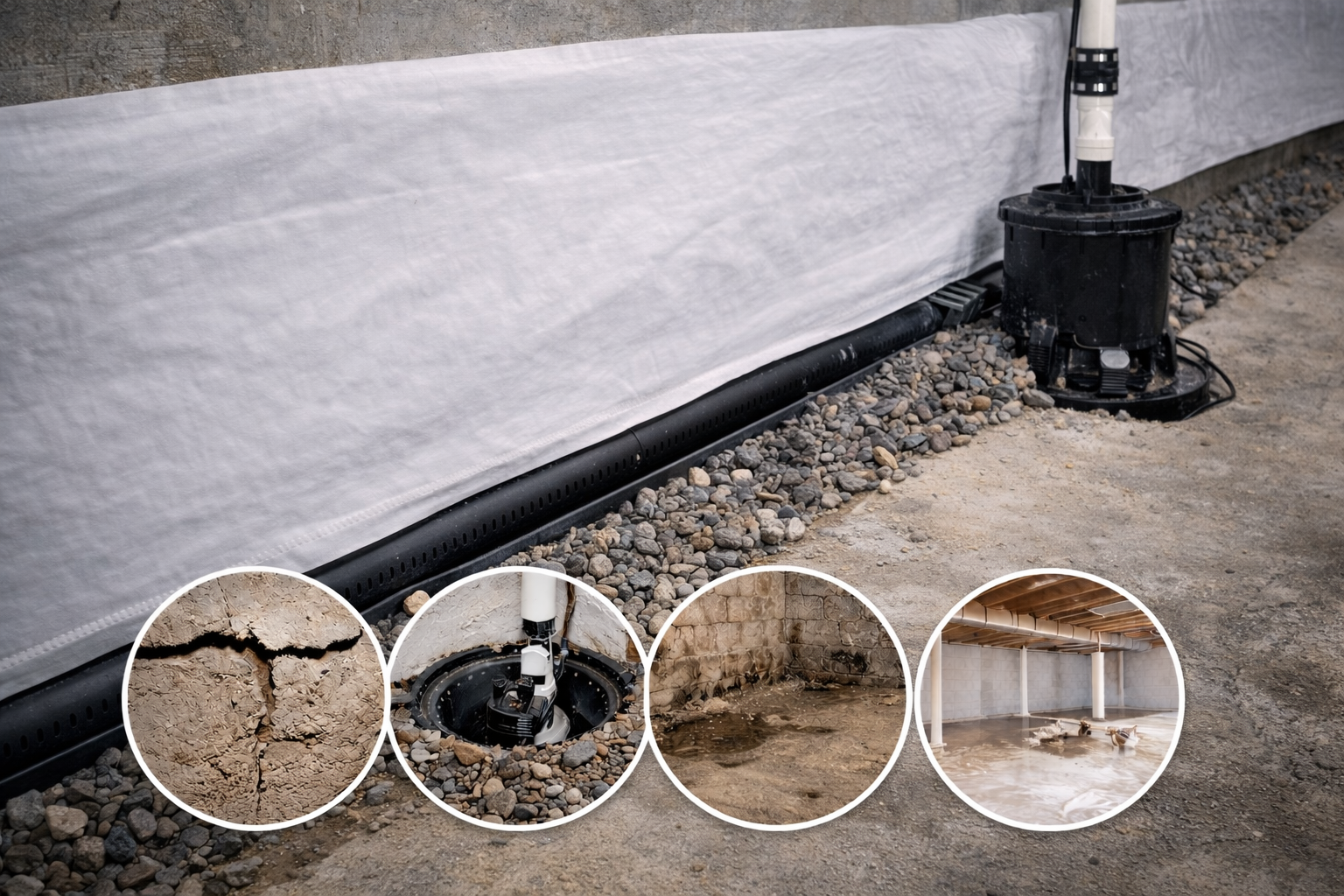
A wet basement is not always caused by one obvious leak. In many Connecticut homes, water enters slowly through the floor-wall joint, foundation cracks, damp concrete walls, or pressure from saturated soil around the home.
When that happens, a basement drainage system can become one of the most important parts of a long-term waterproofing plan.
A properly designed drainage system helps collect water before it spreads across the basement floor and directs it toward a sump pump or drainage point. For homeowners dealing with recurring basement moisture, puddles after rain, musty odors, or water seepage, drainage is often the difference between cleaning up water repeatedly and solving the problem at the source.
At Premier Basement Solutions & Remodeling, we provide custom basement drainage systems in CT for homeowners who want a dry basement, clear answers, and a waterproofing solution built around their home.
What Is a Basement Drainage System?
A basement drainage system is designed to manage water that enters or builds pressure around the foundation. Instead of allowing water to collect on the floor, seep through weak points, or sit along the basement walls, the system collects and redirects it.
In many homes, an interior basement drainage system is installed along the perimeter of the basement, near the area where the floor and wall meet. This is a common entry point for water, especially during heavy rain or snowmelt.
Once the water is collected, it is directed toward a sump pump system, where it can be pumped away from the home.
The goal is simple: control the water before it becomes damage.
Why Connecticut Basements Often Need Drainage.
Connecticut homes deal with changing seasons, heavy rain, snowmelt, humidity, and soil conditions that can put pressure on basement foundations. When the soil around a home becomes saturated, water naturally looks for a path inside.
That path may be:
- The floor-wall joint.
- Foundation cracks.
- Concrete block walls.
- Basement floor seams.
- Window wells.
- Pipe penetrations.
- Low points around the foundation.
- Crawl spaces connected to the basement.
Even if a basement only gets wet during certain storms, the issue can become more frequent over time. A drainage system helps manage that water so it does not keep collecting inside the basement.
Signs Your Basement May Need a Drainage System.
A drainage system may be needed if your basement has recurring water or moisture problems that keep coming back.
Common signs include:
- Water along the basement walls.
- Puddles after heavy rain.
- Moisture at the floor-wall joint.
- Damp concrete floors.
- Musty basement odors.
- White powder or residue on concrete walls.
- A sump pump that runs constantly.
- Water stains near the base of the wall.
- Peeling paint or damaged finishes.
- Humidity that does not go away.
- Mold or mildew concerns.
- Wet carpet, boxes, or stored items.
If water is showing up in the same areas again and again, a drainage system may be part of the right waterproofing solution.
Interior Drainage vs. Temporary Fixes.
Many homeowners try temporary fixes first. They may mop up water, run a dehumidifier, paint over stained walls, seal a visible crack, or move storage items away from the wet area.
Those steps may help manage the symptoms, but they usually do not solve the source of the water.
Interior drainage is different because it is designed to manage the water pathway. Instead of waiting for water to spread across the basement, the system collects it and moves it away.
A dehumidifier can help with air moisture. Waterproof paint may hide staining for a short time. But if water is entering through pressure, cracks, or the floor-wall joint, the basement needs a real water management plan.
How Basement Drainage Works With a Sump Pump.
A drainage system and sump pump often work together.
The drainage system collects water from the problem areas. The sump pump moves that water out of the basement and away from the home.
If a home has a sump pump but no proper drainage system, water may still collect in areas that never reach the pump pit. If a home has drainage but a weak or failing sump pump, the system may not be able to remove water fast enough during heavy rain.
That is why both pieces matter.
A complete waterproofing plan looks at the drainage path, sump pump size, sump pump condition, discharge location, and the amount of water the basement is taking on.
Why Custom Drainage Matters.
No two basements are exactly the same. The right drainage plan depends on the home’s foundation, basement layout, water entry points, sump pump setup, and how the space is being used.
A finished basement may need a different approach than an unfinished storage space. A basement with foundation cracks may need crack repair along with drainage. A basement with crawl space moisture may need encapsulation as part of the larger plan.
Premier Basement Solutions builds drainage systems around the specific basement, not a one-size-fits-all recommendation. That allows our team to address the actual water issue instead of applying the same solution to every home.
Drainage Before Basement Remodeling.
If you are planning to finish or remodel your basement, drainage should be considered before the finished materials go in.
Flooring, drywall, trim, paint, lighting, and built-in features can all be damaged if water problems are not corrected first. Even minor moisture can create musty smells, staining, and repairs behind finished walls or under flooring.
A basement drainage system can help protect the investment before the space becomes a home office, playroom, gym, bathroom, in-law suite, or finished living area.
Premier is especially helpful for homeowners who want both waterproofing and remodeling because our team can address the water issue first, then help plan the finished basement work when the space is ready.
Drainage and Foundation Crack Repair.
Basement water problems often involve more than one issue. A drainage system may help collect and redirect water, but foundation cracks may also need to be repaired to stop seepage through the wall.
Foundation cracks can leak during storms, especially when soil around the home becomes saturated. Depending on the type of crack and the moisture issue, repair may involve urethane or epoxy injection.
When drainage and crack repair are handled together, the basement has a stronger waterproofing plan.
Drainage and Crawl Space Moisture.
Crawl spaces can contribute to basement moisture, musty odors, and humidity. If damp air or ground moisture is entering through the crawl space, it can affect the larger basement environment.
In some homes, crawl space encapsulation may be recommended along with basement drainage. Encapsulation helps seal and protect the crawl space from moisture, while drainage helps manage water entering the basement area.
Looking at both areas together gives homeowners a more complete moisture-control plan.
Why Homeowners Choose Premier Basement Solutions.
Premier Basement Solutions & Remodeling is a family-owned and operated company based in Rocky Hill, CT. We help Connecticut homeowners with basement waterproofing, custom drainage systems, sump pump installation and replacement, foundation crack repair, crawl space encapsulation, basement remodeling, and electrical services.
Our team brings over 75 years of combined expertise across waterproofing, construction management, remodeling, foundation repair, and electrical service. That experience matters because basement water problems are rarely solved with guesswork.
Homeowners choose Premier because we offer:
- Custom basement drainage solutions.
- Patented drainage systems.
- Sump pump installation and replacement.
- Wet basement repair.
- Foundation crack repair.
- Crawl space encapsulation.
- Clear communication.
- Local family-owned service.
- Licensed and insured work.
- Free consultations.
- A practical, no-pressure process.
From the first inspection to the finished project, our goal is to help homeowners understand the problem and choose the right solution for the basement.
When To Ask About a Basement Drainage System.
You should ask about a basement drainage system if you see recurring water, moisture along the walls, puddles after rain, damp floors, musty smells, or a sump pump that seems to be working too hard.
You should also ask before finishing a basement. If water is entering now, it should be addressed before flooring, framing, drywall, and electrical work are installed.
A drainage system is not always the only answer, but for many wet basement problems, it is a key part of keeping the space dry.
Get a Free Basement Drainage Quote in CT.
If your basement gets wet after rain, has moisture along the walls, or needs a better waterproofing plan, Premier Basement Solutions can help.
We provide custom basement drainage systems in CT, along with sump pump installation, foundation crack repair, crawl space encapsulation, and full basement waterproofing solutions.
Schedule your free basement drainage quote today.